


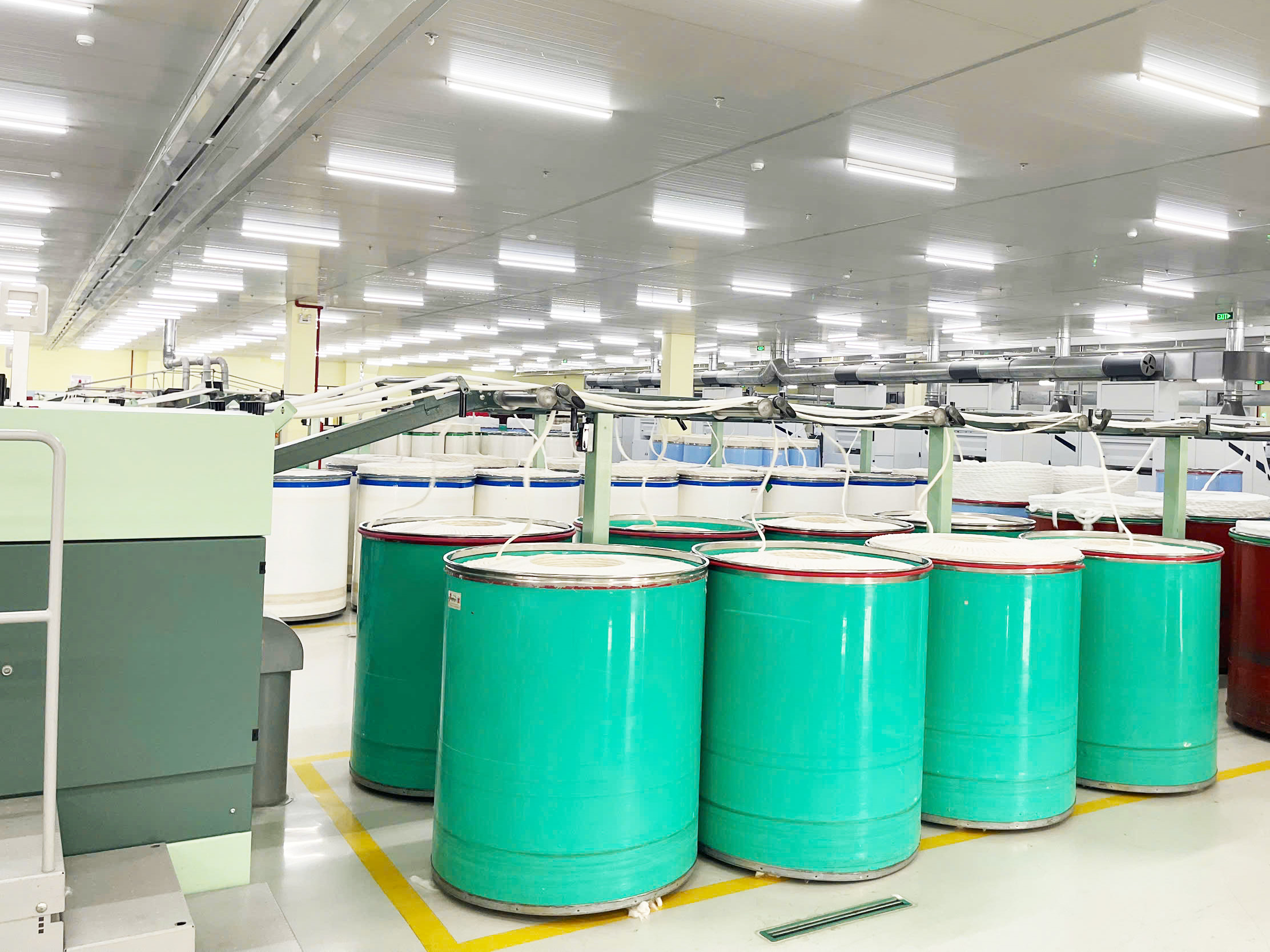
The Fiber Production Process – Foundation of Quality and Competitiveness in the Textile Industry
The fiber production process is the fundamental factor determining the quality of yarn and textile products. Understanding this process not only helps businesses optimize manufacturing efficiency and reduce costs but also ensures that the fibers meet technical and environmental standards. Whether you are a manufacturer, an industry professional, or an investor in the textile field, mastering the fiber production process supports technological innovation, improves product quality, and enhances competitiveness in the global market.
This article provides a detailed guide on the fiber production process — from key stages and technologies to the latest trends shaping the future of the textile industry.
Overview of the Fiber Production Process and Its Importance to the Textile Industry
Definition
The fiber production process is an industrial chain that transforms raw materials such as cotton, wool, and synthetic polymers into yarn used in apparel or technical applications. The main stages include treatment, cleaning, spinning, twisting, and finishing. The quality of the final yarn depends on how each step is executed, the equipment used, and the standards applied for quality control.
Why Understanding the Fiber Production Process Matters
- Improve product quality: Fiber is the core component of textiles. An optimized production process produces strong, soft, and versatile yarns.
- Reduce production costs: A scientific, well-managed process minimizes material waste, labor, and energy consumption.
- Promote sustainability: Eco-friendly, low-emission manufacturing is an inevitable global trend.
- Increase competitiveness: Modern fiber production systems give manufacturers a strong edge in global supply chains.
Types of Raw Materials in Fiber Production
- Natural fibers: Cotton, wool, silk, etc. — traditional materials requiring thorough cleaning and more manual handling.
- Synthetic fibers: Polyester, nylon, acrylic, etc. — produced from chemical compounds using advanced machinery with excellent quality control.
- Blended fibers: Combinations of natural and synthetic fibers that maximize the strengths of both types.
Main Steps in the Fiber Production Process
1. Raw Material Preparation
This is the first step in the fiber production process. Raw materials such as cotton, wool, or synthetic fibers are cleaned and purified to remove impurities, dust, and oil. For natural fibers, this stage includes opening and carding to loosen and align fibers evenly. For synthetic fibers, filaments are extruded, cut, and processed to achieve the desired length.
Key operations include:
- Washing and cleaning: Removes dirt, oil, and microorganisms.
- Opening and carding: Softens and straightens fibers for spinning.
- Fiber quality inspection: Selects fibers that meet standards for length, strength, and color.
2. Spinning
Spinning is the core of fiber production — converting loose fibers into continuous strands. Common spinning technologies include:
- Ring spinning: Produces strong, fine yarns for high-quality fabrics.
- Rotor (open-end) spinning: Fast and energy-efficient, ideal for standard textiles.
- Air-jet spinning: Uses air pressure to form smooth, uniform yarns suitable for large-scale production.
Yarn quality depends on machine speed, draft tension, fiber uniformity, and twist control.
3. Twisting (Plying)
This process reinforces yarn structure by twisting strands together to increase strength, gloss, and performance.
- Single twist: One round of twisting.
- Double or multi-ply twisting: Creates complex structures, ideal for technical fabrics.
4. Finishing
After twisting, yarns undergo finishing to achieve desired softness, color, and sheen.
- Bleaching: Removes natural pigments, preparing fibers for dyeing.
- Dyeing: Applies eco-friendly or conventional dyes to achieve colorfastness.
- Softening and polishing: Enhances texture and usability.
- Final inspection: Ensures the finished yarn meets standards for strength, fineness, and color consistency.
5. Packaging and Quality Control
The final stage involves packaging yarn into bales, cones, or spools for storage and shipping. Each batch undergoes quality verification and labeling.
- Baling or winding: Facilitates handling and logistics.
- Final inspection: Confirms product compliance with technical standards.
- Labeling: Indicates fiber type, origin, batch number, and applied production standards.
Technological Trends and Sustainable Development in Fiber Production
Modern Technological Applications
Recent innovations have significantly optimized the fiber production process:
- Automation: Advanced machines automate spinning, twisting, and dyeing to boost productivity and minimize errors.
- AI and data analytics: Artificial intelligence detects defects and improves quality control.
- Nanofiber technology: Produces ultra-fine fibers with specialized properties for use in medicine, aerospace, and high-tech materials.
Companies leveraging technological innovation gain stronger positions in the global fiber market.
Sustainable and Eco-Friendly Production
Sustainable manufacturing is now essential:
- Recycled materials: Organic cotton and recycled polyester reduce emissions and waste.
- Waterless dyeing and biodegradable dyes: Minimize water use and chemical pollution.
- Waste and emission management: Integrated wastewater and gas treatment systems.
- Environmental certifications: Standards such as OEKO-TEX and GRS affirm a company’s commitment to sustainability.
Future Directions of Fiber Production
- Digital transformation: Using ERP and IoT systems to optimize cost control and quality management.
- Smart fibers: Developing fibers with water resistance, flame retardance, or biosensing capabilities for high-tech applications.
- Bio-based fibers: Producing yarn from renewable sources such as algae, banana fiber, or bamboo.
International Standards in Fiber Production
- ISO 9001: Comprehensive quality management system.
- OEKO-TEX: Ensures product safety for consumers.
- GRS (Global Recycle Standard): Certifies recycled and environmentally responsible materials.
Compliance with these standards ensures global export readiness.
The Role of Human Resources and Technical Training
Beyond advanced machinery, skilled human resources are vital. Companies must provide professional training in technical operations, defect detection, and green production standards. A competent team ensures consistent yarn quality and readiness to meet international demands.
Cost Structure in Fiber Production
- Raw material costs: Cotton and synthetic fibers account for the largest share.
- Machinery investment: Modern equipment increases upfront costs but reduces long-term expenses.
- Labor and operation costs: Personnel, quality control, and maintenance.
- Environmental costs: Waste and emission treatment.
Effective cost management defines the success of fiber production for both small and large enterprises.
Enhancing the Value of Fiber Production – Building the Future of Textiles
Mastering the fiber production process is the key to sustainable development for textile businesses and professionals. Understanding each stage — from raw material handling and spinning to finishing and packaging — along with the latest technologies, quality standards, and cost strategies, determines competitiveness and market success.
Precision, quality control, and technological innovation remain the foundation of progress. Green production, automation, and international safety standards not only drive economic growth but also protect the environment and community health.
Vietnamese textile enterprises are increasingly adopting international-standard production processes, maximizing domestic resources, and investing in modern equipment. Developing smart and eco-friendly fibers opens export opportunities to demanding markets such as the EU, the U.S., and Japan.
For customers and partners, understanding the fiber production process enables better product selection, source tracing, and certification verification. Digitalization further improves visibility, early defect detection, and operational efficiency across the supply chain.
As the textile industry evolves to meet global challenges, fiber production will continue to advance in technology, management, and sustainability. Investing in this process means investing in the future of textiles — expanding job opportunities, fostering innovation, and contributing to long-term economic growth.
If you aim to enhance your fiber production line, start by implementing standardized processes, embracing new technologies, investing in skilled labor, and nurturing innovative ideas. These actions pave the way for lasting success, strong brand reputation, and a more sustainable textile industry for Vietnam and the world.

Bài viết liên quan
News
The Benefits of Fibers in the Apparel Industry
In today’s modern apparel industry, the choice of materials for each garment not only affects product quality and durability but also determines the end-user experience. Among all components, fiber plays a fundamental role — it forms the foundation of every fabric and piece of clothing. Beyond ensuring strength and resilience, fibers contribute to health protection,
Xem thêmNews
Global Demand for Fiber
Global Fiber Demand: Trends, Challenges, and Future Directions The demand for fiber worldwide is a crucial topic not only for textile and apparel businesses but also for the fashion industry, material production, and modern social life. In the context of globalization and the rapid advancement of new material technologies, understanding global fiber demand trends helps
Xem thêm